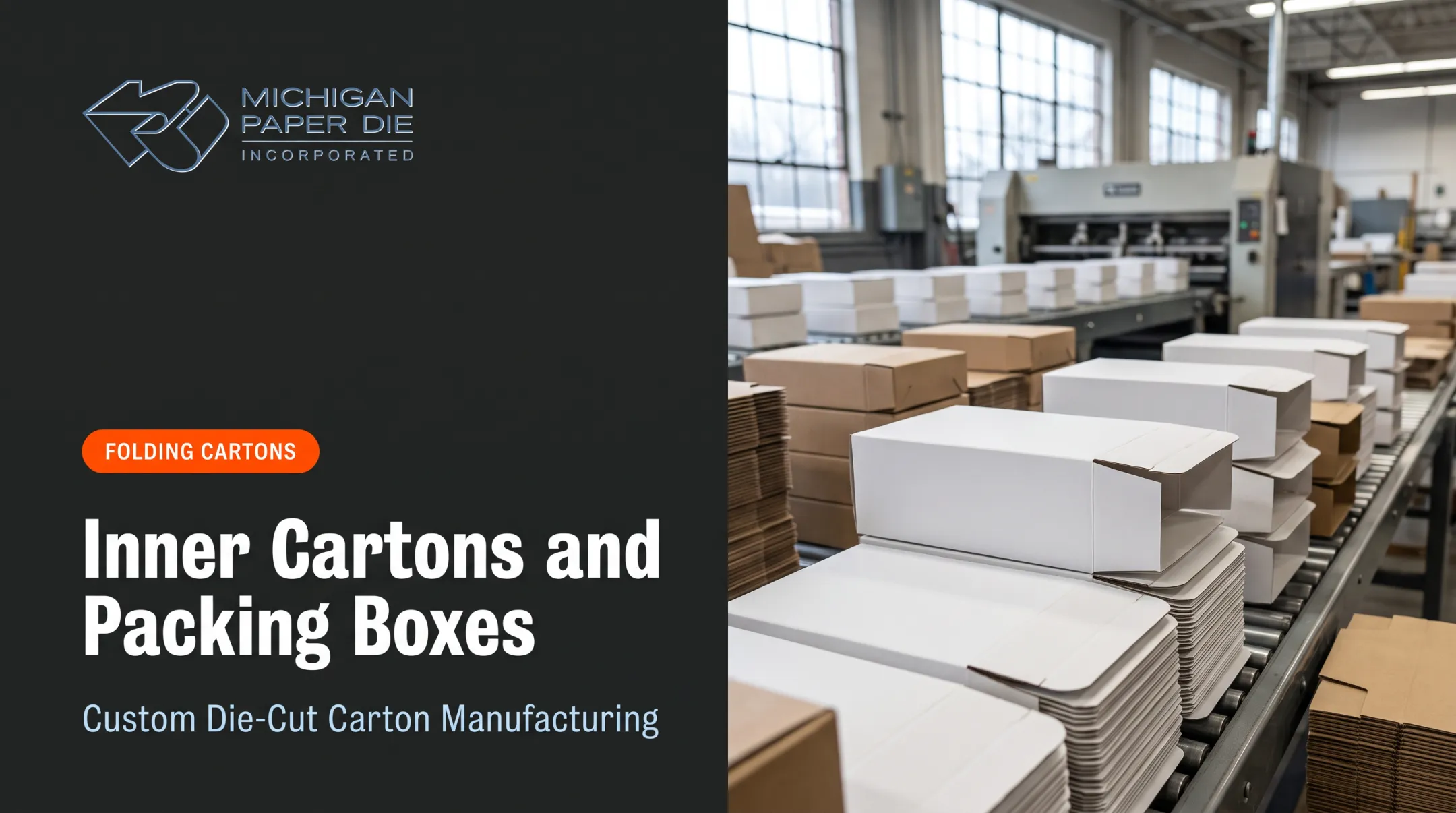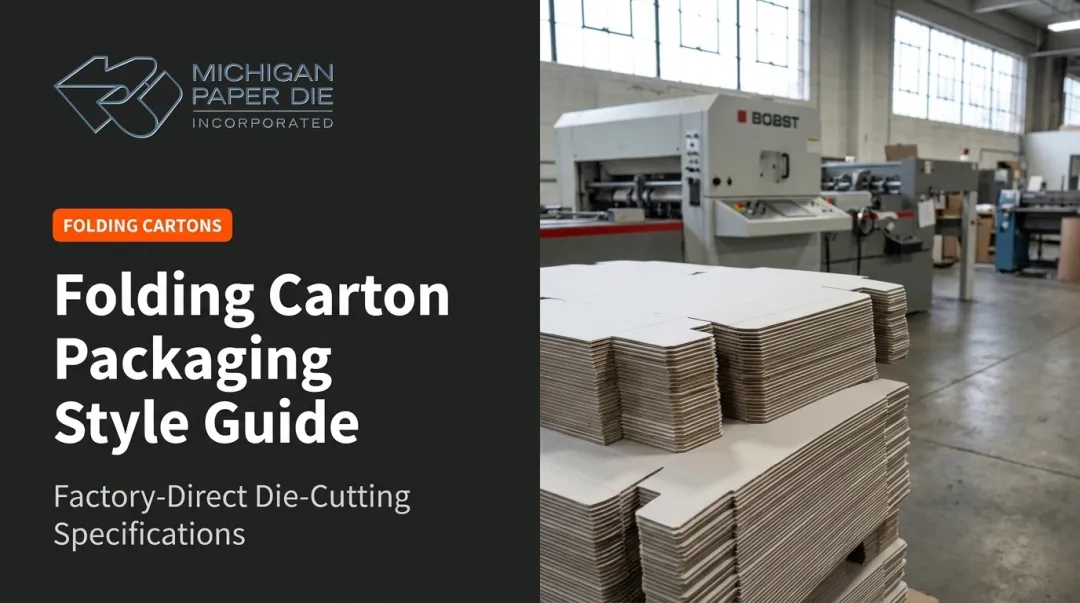

Pharmaceutical folding is a specialized discipline that covers two very different products: folding cartons that protect and display medication, and leaflet or package inserts that carry patient information. Each has its own tolerances, materials, and failure points. This guide breaks down the fold types, the paperboard science, the compliance stakes, and how to choose a finishing partner who won't let a crease line become a production crisis.
Key Takeaways
- Exact, repeatable fold dimensions keep FDA labels compliant and packaging lines running without jams
- Cartons and inserts need different paperboard weights and folding techniques—spec them separately
- An experienced die-cutting partner catches tolerance issues before they hit the production floor
- No universal gsm or caliper standard exists: set specs project by project
What Is Pharmaceutical Folding?
Pharmaceutical folding is the precise creasing and folding of paperboard cartons and ultra-lightweight insert leaflets used to package medications. A "fold," in this context, refers to a controlled crease line that lets a flat carton blank or printed leaflet collapse into a compact, functional shape. That shape fits inside a carton, blister pack, or vial without damaging the print or the content underneath. Folding plays two roles at once:
- Compacts multi-panel leaflets small enough to insert into tight packaging
- Safeguards tablets or vials while displaying branding and required labeling Because folded inserts and cartons are part of a drug's FDA-approved packaging configuration, misalignment isn't just a cosmetic problem. FDA's framework treats changes to package inserts, package labeling, or container labels as labeling changes requiring documented approval processes. On the production floor, a carton that doesn't fold to spec can stop an automated line mid-run. There's no single published dollar figure for what folding defects cost pharmaceutical manufacturers industry-wide. PMMI's predictive maintenance research identifies servo-axis failures and downtime drivers as recurring issues on packaging lines. The real cost shows up in scrap, rework, investigation time, and line-clearance delays rather than a tidy per-unit number. Manufacturers track these metrics at the plant level rather than relying on generic benchmarks.
The Four Common Types of Pharmaceutical Folds
Fold terminology in pharma isn't perfectly standardized across the industry, but four patterns show up repeatedly.
Roll (Parallel) Folds
Panels fold in the same direction repeatedly, nesting into one another like a spiral. This is the go-to choice for straightforward inserts with a moderate panel count, since it's simple to produce and simple for a machine to insert.
Accordion (Zigzag) Folds
Panels fold in alternating directions, like a paper fan. This pattern packs a longer leaflet into a compact footprint while keeping it easy for a patient or pharmacist to unfold flat. It's a common choice when regulatory text runs long but insert space is tight.
Cross Folds
Cross folds combine a fold with a second perpendicular fold, often layered with other fold types. They're typically reserved for extra-large inserts (for example, leaflets with 100+ panels of multilingual dosing information) where a single fold direction simply can't compress the sheet enough.
Gate Folds
Two panels fold inward toward a center crease, meeting or nearly meeting in the middle. Gate folds show up on smaller dosage cartons or specialty inserts where a compact, symmetrical opening matters.

Choosing between these depends on:
- Leaflet length and total panel count
- Paperboard or paper weight
- The packaging line's insertion mechanism and feeder tolerances
A fold name alone is not a manufacturing spec. A production run needs a dieline or fold drawing that specifies:
- Open size and folded size
- Panel sequence
- Insertion orientation
A label like "gate fold" is only a starting point, not a build-ready instruction.
Paperboard and Material Considerations for Pharma Folding
Cartons and inserts are built from completely different stock, and mixing up the specs causes real production problems.
Folding cartons typically use SBS (solid bleached sulfate), CUK, or CRB paperboard. Each grade behaves differently:
| Grade | Characteristics |
|---|---|
| SBS | Bright white surface, fine print detail, common for premium and pharma cartons |
| CUK/SUS | More rigid unbleached kraft; strong structural cartons |
| CRB | Coated recycled board; cost-sensitive, high-volume runs |
Package inserts run far lighter. Commercial ranges span roughly 28–60 gsm, with some pharma leaflets historically in the 40–50 gsm range before newer formulations pushed down to 32–37 gsm.
The tradeoff is opacity: lighter stock cuts bulk and folded thickness, but it still has to block show-through from the opposite side.
Two factors that make or break a clean fold:
- Grain direction matters more than most people expect. Folding parallel to the grain breaks fewer fibers, producing a crisp crease instead of a cracked one.
- Board stiffness affects how a folded carton runs on automated filling and closing equipment: too flimsy, and it won't hold shape through the line.

There is no single industry-wide gsm or caliper standard. Every project needs its own approved specification, tested and sampled before a production run.
Quality Control and Regulatory Compliance in Pharmaceutical Folding
Pharmaceutical folding is tied directly to how a drug is labeled and approved. The FDA's regulations cover several requirements that folding decisions have to respect:
- Certain prescription drug labels must carry a linear barcode with the NDC number, positioned so it's readable on the outer container or immediate packaging
- Changes to package inserts or carton labeling can require prior FDA approval, depending on the nature of the change
- Tamper-evident packaging rules apply to specified OTC products accessible to consumers, requiring visible evidence if the package has been opened
None of these rules dictate a specific fold pattern. They do mean folded components have to align exactly with what was approved. Get the crease position or panel sequence wrong, and you risk a mismatch between the physical product and its regulatory file.
On the production floor, this translates into needing:
- Version-controlled artwork that matches the approved fold pattern
- Barcode verification confirming the right insert accompanies the right medication
- Documented inspection at each production stage, not just a final check
A detailed Quality Control Report supports that discipline. A traceable record (proofs, prototype approvals, pull sheets, production notes) gives a pharma client documentation to point to if a dimensional question comes up later, instead of reconstructing the job after the fact.

Choosing the Right Pharmaceutical Folding and Packaging Partner
Pharma brands need more than a printer. They need a converting partner that combines precision die-cutting, accurate folding, and hand-finishing skill for both cartons and delicate inserts.
Michigan Paper Die builds every steel-rule die in-house using CAD software, CNC router technology, and an automatic rule-bending machine. That setup produces carton blanks with the crease-line accuracy needed for clean, consistent folds run after run.
In-house control also means on-the-fly die adjustments during prototype review, instead of waiting on an outside vendor.
Why the hand bindery department matters:
- Accounts for about 30% of total business
- Handles manual collating, tipping, poly-bagging, and delicate assembly
- Brings decades of detail-intensive finishing experience to fragile insert stock
Every job also comes with a Quality Control Report under the company's Quality First policy — covering proof reviews, pull sheets, die maintenance notes, and production documentation. For pharma packaging, where a folding error can mean a halted line or a labeling mismatch, that paper trail matters as much as the fold itself.

With over 40 years serving Metro Detroit and clients across the broader Midwest, including Ohio, Indiana, and Michigan, Michigan Paper Die works with design firms, agencies, and manufacturers who need cartons and specialty finishing done right the first time.
If you're finalizing carton or insert specifications for a regulated product, talk with an experienced converting house before production locks in your fold pattern: 313.873.0404.
Frequently Asked Questions
What does "fold" mean in medicine?
In pharmaceutical packaging, a fold is a precise crease line that lets a carton blank or insert leaflet collapse into a compact shape. The crease must hold without damaging print or hurting readability.
What are the four types of folds?
Roll (parallel), accordion (zigzag), gate, and cross folds. Roll and accordion suit standard-length inserts; gate folds fit smaller cartons; cross folds handle extra-large, high-panel-count leaflets.
Why is paperboard weight so critical for pharmaceutical inserts?
Lighter stock keeps folded thickness low so inserts fit small cartons and automated lines run smoothly. The sheet still needs enough opacity for clear two-sided print.
How does folding accuracy affect pharmaceutical manufacturing costs?
Small folding errors can jam high-speed packaging lines, causing downtime, scrap, and rework. Plant-level tracking consistently flags these errors as a major cost driver.
What decorative finishes are commonly used on pharmaceutical folding cartons?
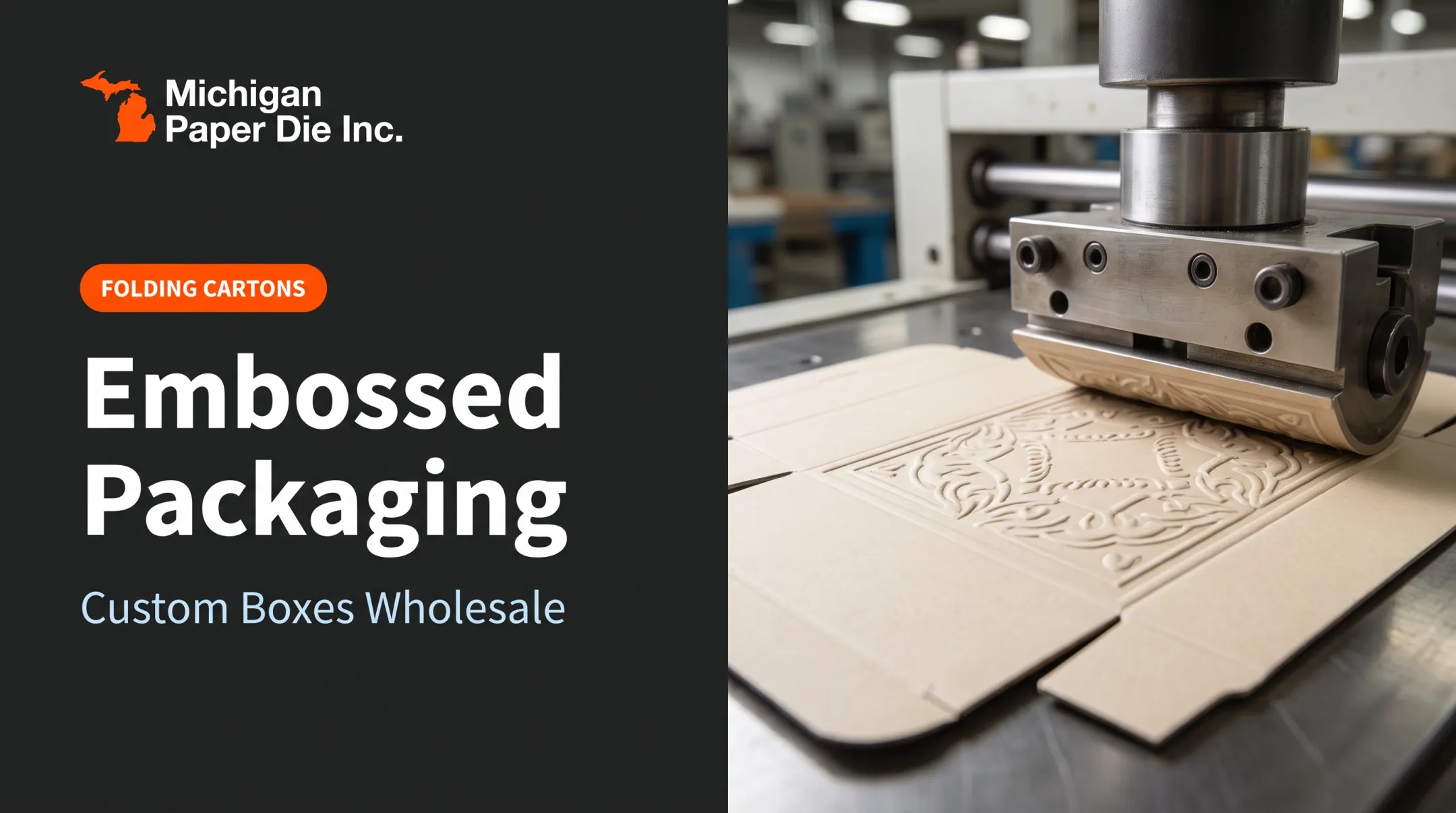
Embossing, foil stamping, spot UV coating, and tamper-evident seals are common. Finishes must meet readability and inspection rules, not just visual appeal.
Can a local converting company handle both folding cartons and package inserts?
Yes. A full-service finishing house with in-house die-cutting, folding, and hand bindery can produce both under one roof, cutting coordination issues and keeping quality control consistent.