
Many brands don't think about die cutting until something goes wrong: a box that won't close right, panels that crack along the fold, or a print run where every tenth piece looks slightly off. By then, it's already cost time and money.
This guide breaks down how cardboard box die cutters work, the main types of machines used in production, how to choose the right process for your project, and why partnering with an experienced die-maker changes the outcome.
Key Takeaways
- Steel-rule dies cut and crease cardboard into custom shapes in a single pass
- Flatbed, rotary, and digital die cutters each suit different volumes and complexity levels
- Board thickness, design complexity, and turnaround needs should drive your process choice
- An experienced die-maker with in-house construction and quality checks reduces errors and speeds production
What Is a Cardboard Box Die Cutter and How Does It Work?
A cardboard box die cutter uses a steel-rule die, a custom-shaped blade set into a wooden or metal board, to cut and crease flat cardboard into a specific shape in one pass. Pressure from a press or roller forces the die through the sheet, separating the outline while simultaneously scoring fold lines into the board.
Cutting and creasing aren't the same thing, though they happen together:
- Cutting fully separates the material along the die's blade line
- Creasing/scoring indents the board without cutting through it, creating a clean fold point later
The result is a flat blank, sometimes called a knocked-down box, ready for gluing and assembly.

Building the Die Before Anything Gets Cut
Before a blade ever touches board, the die itself has to be designed and built. Michigan Paper Die uses Cimek CAD software to construct steel-rule dies in-house, and that software can import Adobe Illustrator EPS die-line files directly, which cuts down on prep time.
The same approved digital file used to build a client prototype gets sent to a CNC router, which cuts the die board with tight tolerances. An automatic rule-bending machine then forms the cutting rule to match.
Working this way in-house means adjustments happen on the fly instead of waiting on an outside vendor's schedule.
That same precision also cuts material waste. BW Papersystems reports that web-fed platen die-cutting can reduce board use per carton by up to 18%, largely through nested layouts and eliminating gripper margins. Layout and cutting accuracy directly affect material cost, not just fit.

Types of Cardboard Die Cutters
Not every die cutter suits every job. The right choice depends heavily on volume, board thickness, and how complex your shape is.
Flatbed Die Cutters
Flatbed cutters use a stationary die pressed against a flat bed. They're the workhorse for small to mid-size runs and intricate or irregular shapes, such as presentation folders, display packaging, or boxes with multiple windows and score lines.
Tooling is relatively affordable and easy to replace, though setup time can add cost on very short runs.
Rotary Die Cutters
Rotary cutters use a cylindrical die that rolls continuously across the material, built for speed and consistency at high volume. Solid rotary dies support very high sheet-per-hour throughput, making them well-suited to long, repeatable production runs where the design doesn't change often. Flexible rotary dies trade some durability for lower tooling cost on shorter runs.
Digital and Oscillating Blade Cutters
Digital cutters skip the physical die entirely, using computer-controlled blades or lasers to cut directly from an uploaded file. That makes them ideal for:
- One-off prototypes
- Short runs with frequent design changes
- Testing a concept before committing to tooling
The tradeoff: digital cutting has no tooling cost per job, but steel-rule dies remain far more cost-effective once you're running repeat production at real volume.
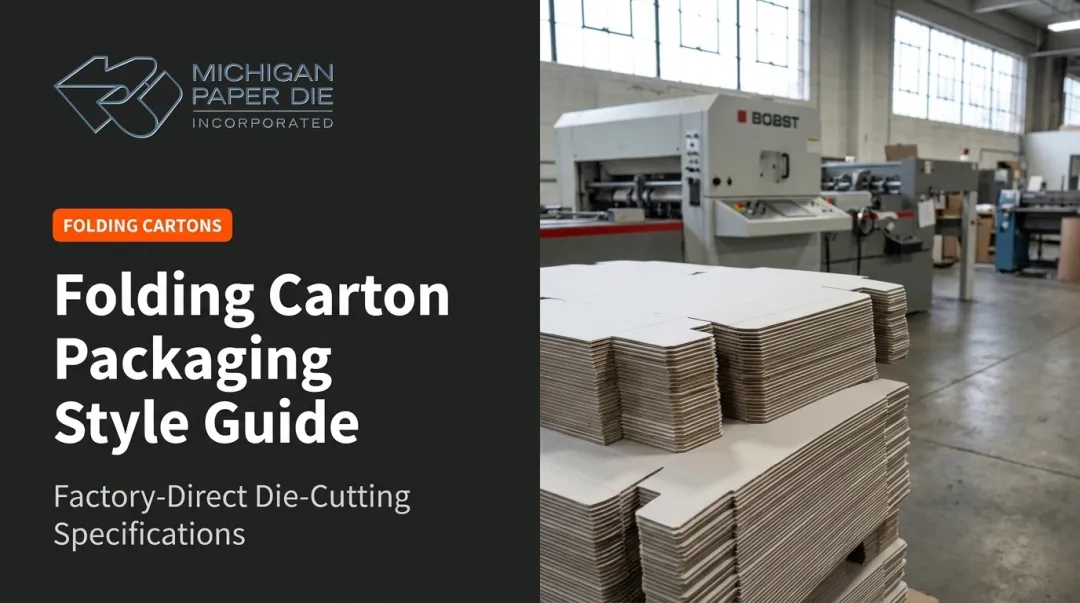
When that volume calls for automatic flatbed capacity, Michigan Paper Die operates three Bobst die-cutters. Each processes sheets up to 28" x 40" and handles material from roughly .002" to .080" (2-point through 80-point stock). That range covers lightweight cover paper through chipboard, with inline interior-stripping so punched windows and holes come out in the same pass.

How to Choose the Right Die-Cutting Process for Your Project
Picking a process comes down to five practical questions.
- What's your production volume? Short-run prototypes favor digital cutting or flexible dies. High-volume manufacturing favors rotary or established flatbed setups.
- What material are you cutting? Paperboard caliper and coatings affect blade pressure and die design — heavier or heavily coated stock needs a die built to cut cleanly without crushing or tearing the material.
- How complex is the design? More cuts, folds, windows, or embossing features mean more engineering time and higher die construction cost.
- What's your budget and timeline? In-house die construction shortens revisions versus outsourcing, because design changes stay inside one CAD-to-CNC workflow instead of bouncing between vendors.
- Have you approved a physical prototype? This step catches fit and structural issues before you commit to full die construction — much less costly than discovering the issue after production has started.
Michigan Paper Die follows the same sequence:
- Clients supply an EPS die-line, laser proof, mockup, or press sheet
- A physical prototype is built on-site for approval before CNC work begins
- The approved file drives both die-board cutting and rule bending for consistency
Common Challenges in Cardboard Die Cutting (and How to Avoid Them)
Even with good equipment, die cutting runs into predictable trouble spots.
- Inaccurate cuts often trace back to worn dies or poor alignment. Regular die inspection and maintenance before a job runs helps catch this early.
- Crease line problems (wrong height or width) cause folding and gluing headaches downstream, even if the cut itself looks fine.
- Uncut or partially cut material happens when board thickness exceeds what the die (and press pressure) was built to handle.
Catching these issues before mass production depends on disciplined quality control. Michigan Paper Die's Quality Control Report, included with every job at no extra charge, documents production notes, proofs, mockups, and pull-sheet checks throughout the run.
Each pull produces two numbered sheets, one for internal records and one packaged with the customer's order, so any drift in quality gets flagged before it becomes a full run of unusable blanks.

Why Work With a Professional Die-Cutting Partner
A die-maker's experience shows up in the details most buyers never see until something breaks.
Michigan Paper Die has built steel-rule dies in-house for over 40 years. The team uses CAD software and CNC routing for die-board accuracy, plus an automatic rule-bending machine to shape the cutting rule itself. Because construction happens under one roof, clients can:
- Import die-line files directly to speed up design
- Get on-site prototype approval before full die construction begins
- Receive a detailed Quality Control Report with every job
That in-house model also extends beyond die cutting. With four gluing machines, hand bindery services for collating and assembly, and roughly 20,000 square feet of warehouse space with daily UPS and FedEx pickup, clients can consolidate design, production, finishing, and fulfillment with one partner instead of juggling several vendors.
For design firms, agencies, and commercial printers across Michigan and the broader Midwest, that means fewer handoffs and faster turnaround from concept to shipped box.
Frequently Asked Questions
What is the best die cutter for cutting cardboard?
It depends on volume and complexity. Flatbed cutters suit custom or intricate shapes, rotary cutters handle high-volume runs efficiently, and digital cutters work well for prototyping without building a physical die first.
What does die cut mean in packaging?
Die cutting means using a custom steel-rule die to cut and crease cardboard into a precise, repeatable shape for boxes and packaging. The same die produces identical blanks run after run.
How does paper die cutting work?
It uses the same press-and-blade mechanism as cardboard die cutting, forcing a steel-rule die through the sheet to cut and score it. Thinner paper stock typically requires lighter press pressure than heavier board.
Can cardboard be die cut without a machine?
Hand-cutting with a knife and template is possible, but it's far less precise and consistent than machine die cutting, especially across multiple pieces. For repeat production, machine cutting is the practical choice.
How much does a custom die cost for cardboard packaging?
Cost varies based on die size, material thickness, design complexity, and production volume. Michigan Paper Die builds custom steel-rule dies in-house and quotes each job from your dieline and specs.