
Business owners often use "inner carton" and "packing box" interchangeably, but they're not the same thing. Getting this distinction right, and choosing the correct structure for your product, can mean fewer returns, lower shipping costs, and a better first impression when a customer opens the box.
This guide breaks down the definitions, the main carton types, and how to pick the right one. We'll also look at how working with an experienced converting house like Michigan Paper Die solves many of these packaging headaches before they start.
Key Takeaways
- Inner cartons protect smaller product quantities inside a master carton, reducing transit damage and handling waste
- Choose among folding cartons, rigid boxes, and corrugated boxes based on product weight, presentation needs, and ship method
- The right inner carton material and fit reduce damage, cut shipping costs, and improve brand perception
- Working with an in-house die-cutting partner speeds up custom sizing and catches problems before mass production
What Are Inner Cartons and Packing Boxes?
"Packing box" is a broad term. It covers any container used to hold, protect, or ship a product, whether that's the small carton a single item ships in or the large corrugated case stacked on a pallet.
Inner Carton vs. Master Carton
An inner carton (sometimes called an inner pack) groups a smaller quantity of a single SKU. A master carton is the larger outer box that holds multiple inner cartons for bulk shipping or storage.
A typical configuration might look like:
- 6 units packed into one inner carton
- 8 inner cartons loaded into one master carton
- 48 total units shipped per master carton
According to GS1 US, the industry body that standardizes supply chain identifiers, an inner pack is an intermediate package containing multiples of the same trade item, and a case is the standard shipping unit containing those inner packs, all sharing one GTIN. Shared GTINs keep counts consistent in the warehouse and still protect units in transit.
What's an Inner Box?
An inner box is a secondary box or tray inside the packaging. It organizes, cushions, or displays a product before it reaches the master carton. Think of a foam-lined electronics tray sitting inside a printed retail box, which then goes into a corrugated shipper.
The full hierarchy typically runs: unit → inner pack → case/master pack → pallet. Each layer exists for a reason:
- Unit – the individual, sellable item
- Inner pack – groups units for kitting or partial-case orders
- Case/master pack – the standard bulk shipping and inventory unit
- Pallet – consolidates cases for freight and warehouse storage

Each layer works best when the carton matches the product, not a generic stock size. Michigan Paper Die builds steel-rule dies in-house from a customer's dieline or mockup, then prototypes the fit before production so the inner carton protects the product without wasted space.
Types of Cartons and Packing Boxes
Most packaging falls into three broad categories: folding cartons, rigid boxes, and corrugated boxes. Each serves a different purpose in the packaging hierarchy.
Folding Cartons
These are the flat, printed paperboard boxes that ship flat and pop into shape at assembly. Common styles include:
- Straight tuck end – top and bottom panels tuck in the same direction; simple, clean, good for lightweight retail goods
- Reverse tuck end – panels tuck in opposite directions; works well for automated or manual assembly lines
- Auto-lock bottom – pre-glued at the converter so the bottom pops open and locks during setup, adding stability for heavier contents
- Snap-lock bottom – hand-erected bottom flaps that lock into place; extra support for heavier products without pre-gluing
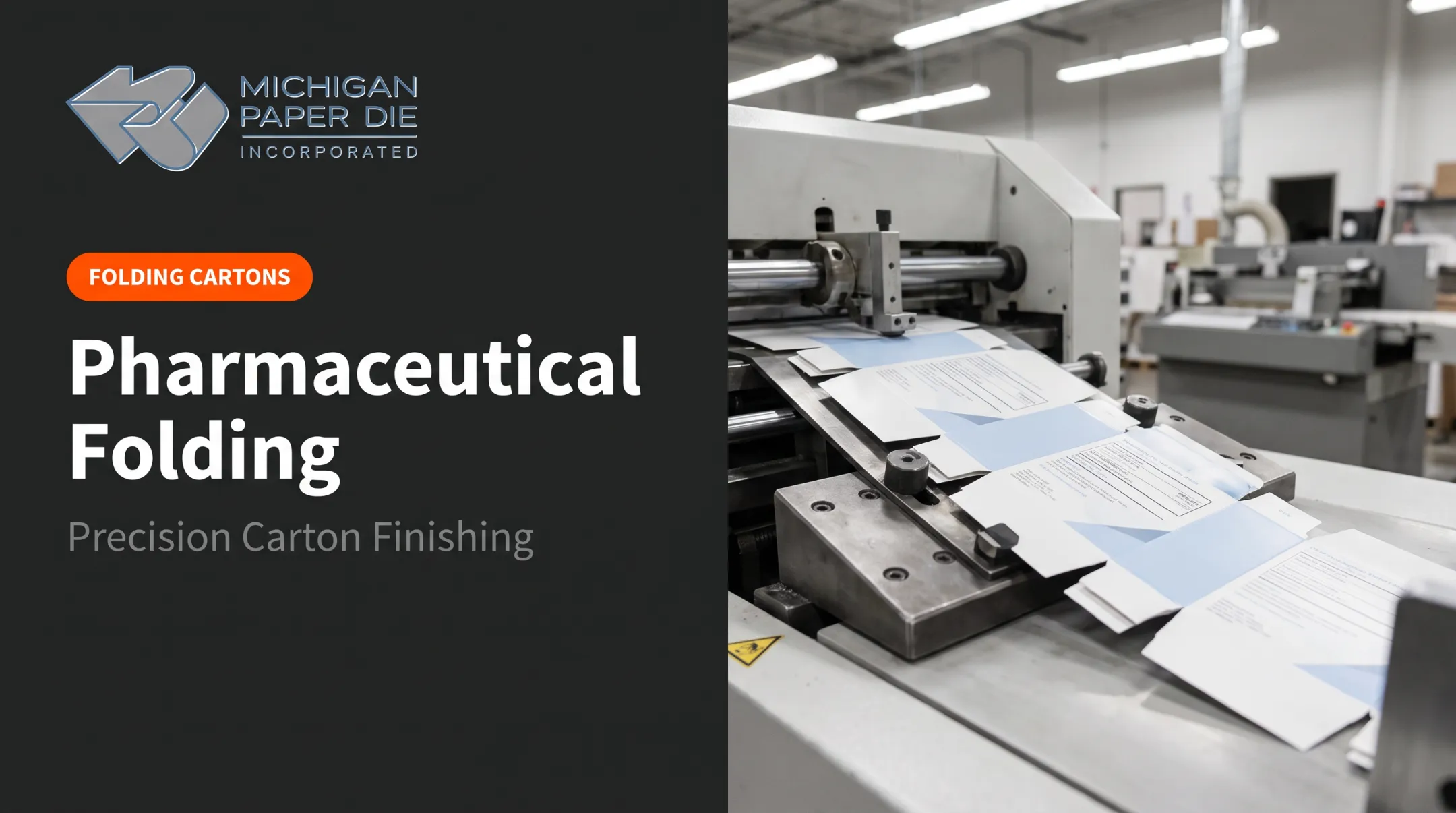
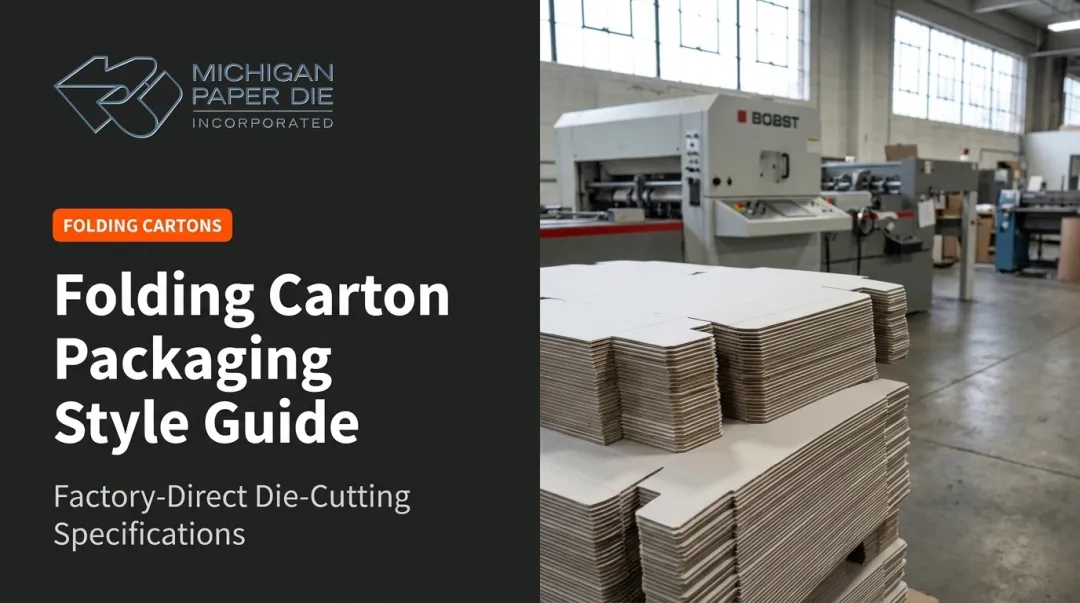
Folding cartons are widely used for cosmetics, food, and retail display packaging. Michigan Paper Die produces tuck-type and crash-lock folding cartons in-house on four gluing machines configured for the board stock and run.
Rigid (Set-Up) Boxes
Rigid boxes don't fold flat. They're built as a permanent structure and used when presentation matters as much as protection:
- Two-piece boxes – separate lid and tray, full side coverage
- Magnetic closure boxes – embedded magnets for a secure, premium close
- Drawer-style boxes – sleeve with a sliding tray for a reveal-style opening
- Shoulder-neck boxes – layered lid and tray with an exposed neck when closed
These fit premium goods like electronics, jewelry, and gift packaging where perceived value justifies the higher unit cost.
Corrugated and Shipping Boxes
Corrugated boxes take the abuse of shipping and storage. Formats you'll see most often:
- Regular slotted containers (RSC) – the most common shipping box style, with flaps meeting at the center
- Double or triple-wall boxes – added board layers for heavier loads or rough handling
- Mailer and telescope boxes – separate top and bottom pieces or adjustable-depth designs

Many brands combine an inner folding carton or foam tray with an outer corrugated shipper. This gives you the presentation of paperboard and the transit protection of corrugated in one package.
Why Proper Inner Carton Design Matters
Poor inner packaging shows up in three places: damaged goods, wasted shipping spend, and disappointed customers.
Customer Experience Impact
Premium packaging changes how buyers feel about a brand. In Dotcom Distribution's 2022 study of over 1,150 U.S. online shoppers, 41% said premium packaging made them more excited to open a package, and 51% said it made the brand feel more upscale.
Among luxury shoppers, 42% said they were more likely to purchase again after a premium unboxing experience.
Dimensional Weight and Shipping Cost
Shipping carriers charge based on dimensional (DIM) weight, not just actual weight. UPS calculates this as length × width × height, divided by a standard divisor, rounding up to the next billable pound.
An oversized inner carton with excess air inside raises billable weight even when the product itself hasn't changed.
Right-sized inserts control movement and cut empty volume. Common options include:
- Foam inserts cut to product shape
- Corrugated dividers for multi-item packs
- Blister-style inserts for small parts
- Custom paperboard trays
Custom die-cutting is what makes those inserts fit. Michigan Paper Die runs an in-house CNC router and automatic rule-bending machine from the same approved design file, so trays and inner cartons can follow a product's actual contour.
Board calipers typically range from about .002 to .080 inches (2-point through 80-point), spanning paperboard and chipboard used in folding cartons and custom trays. A tighter fit means less wasted volume, less DIM weight penalty, and less room for products to shift in transit.

How to Choose the Right Packing Box for Your Product
Three factors drive most packaging decisions: fragility, shipping destination, and budget.
1. Product type and fragility Heavier or delicate items need reinforced inner cartons with cushioning. Lightweight items, like a folded T-shirt or a box of pens, are usually fine in a simple folding carton with minimal void fill.
2. Shipping method and destination Retail, direct-to-consumer, and wholesale shipments all carry different requirements:
- Retail compliance: Keep equal quantities per case pack—Amazon commonly caps packs at 150 units per box—with matching SKU and condition in every box
- DTC shipments: Design for unboxing experience and single-order fulfillment
- Wholesale/bulk: Standardize case counts and optimize for pallet efficiency
3. Cost versus brand experience Premium rigid boxes and custom-fitted inner trays elevate perceived value but cost more per unit than a standard folding carton. A cosmetics brand launching a gift set might justify a magnetic rigid box; a hardware supplier shipping bulk fasteners probably doesn't need one. Match structure and finish to the product and channel so you pay for protection and presentation you will actually use.
Why Work With an Experienced Packaging Partner
An experienced packaging partner shortens timelines and lowers production risk. In-house die construction is a clear example: when a converter builds its own steel-rule dies rather than outsourcing, design changes happen on the fly instead of waiting on a third party.
Michigan Paper Die's process illustrates this:
- Receive the client's dieline, laser proof, mockup, or press sheet
- Import the file into in-house CAD software (Cimek)
- Build and internally approve a physical prototype before full die construction
- Drive both the CNC router and automatic rule-bending machine from the same approved file
This sequence catches sizing or fit problems before a production die is cut, not after a large run has already shipped. Michigan Paper Die's Quality First policy backs this up with Quality Control Reports on every job, documenting pull-sheet checks, proofs, and production notes throughout the run.

Working with a full-service converting house also cuts down on vendor juggling. From its 632 Harper Ave facility in Detroit—operating since the late 1960s—Michigan Paper Die handles the full converting stack under one roof:
- Design consultation
- Die-cutting
- High-speed gluing across four machines
- Hand bindery (roughly 30% of its business)
Fewer vendors means fewer places for miscommunication to creep in.
Frequently Asked Questions
What is the difference between an inner carton and a master carton?
An inner carton holds a smaller grouping of a single SKU, like 6 units of one product. The master carton is the larger outer case that contains multiple inner cartons for bulk shipping or storage.
What is an inner box?
An inner box is a secondary container or tray inside the packaging. It organizes, cushions, or displays a product before it goes into the master carton, such as a foam tray holding electronics.
What are the different types of cartons?
The three main categories are folding cartons (tuck-end, lock-bottom styles), rigid boxes (two-piece, magnetic, drawer-style), and corrugated boxes (RSC, double-wall, mailers). Each suits different products and budgets.
How do I know what size inner carton I need?
Match the carton dimensions as closely as possible to your product's actual size. A tighter fit reduces DIM weight shipping costs and keeps items from shifting during transit.
Can inner cartons be customized with branding?
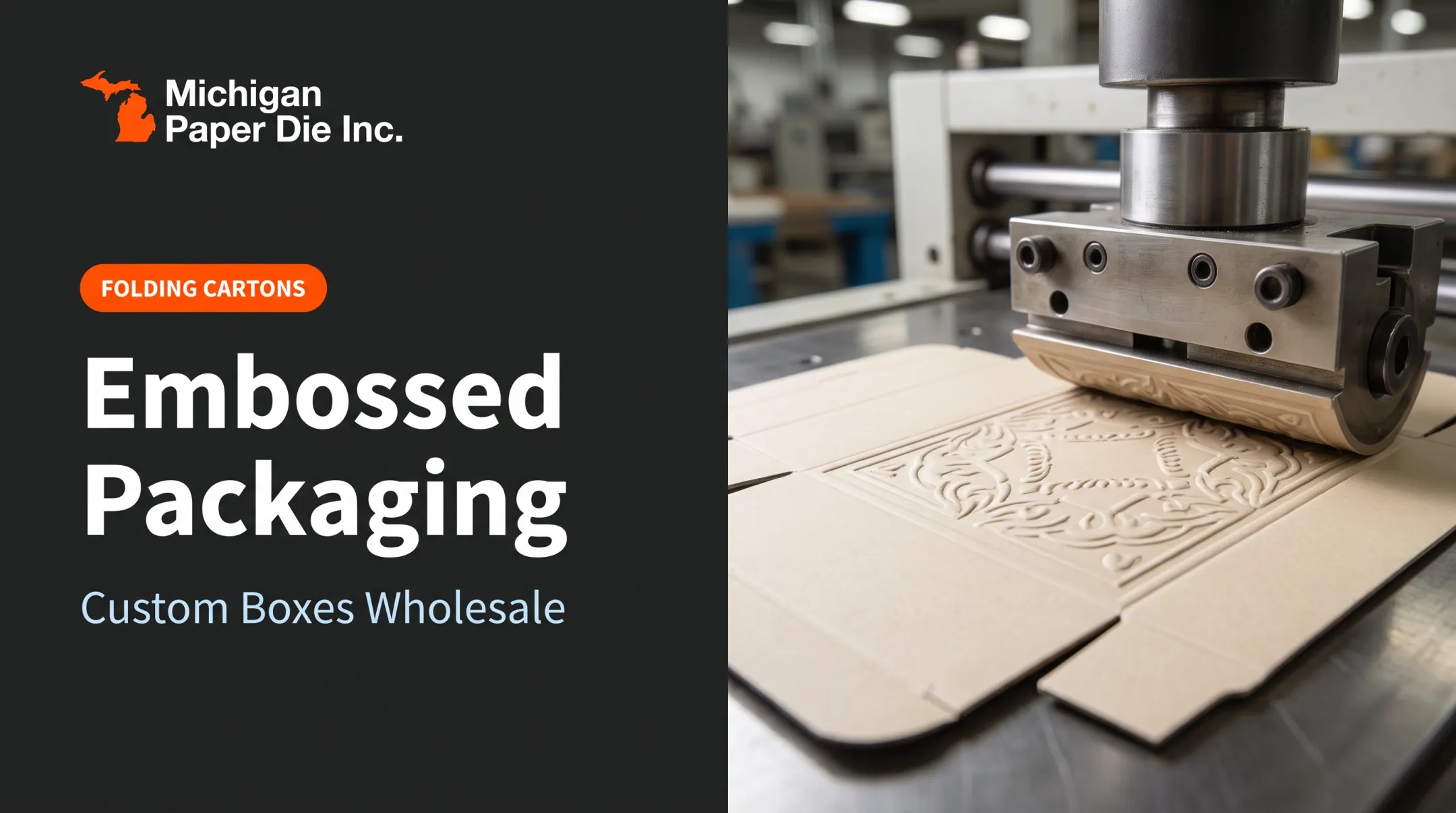
Yes. Inner cartons can be printed, foil stamped, embossed, or die-cut with custom shapes so branding shows up at unboxing and becomes part of the customer experience.