
This guide breaks down what embossing actually is, the die types and materials that make it work at scale, and how to source it for a wholesale order without guessing on cost or turnaround.
Key Takeaways
- Embossing presses a raised design into paperboard using matched dies — no ink required
- Die metal (magnesium, copper, brass) determines cost, durability, and detail level for bulk runs
- Heavier stocks like SBS folding cartons and rigid board hold relief better than thin chipboard
- In-house die construction cuts wholesale turnaround compared to outsourced tooling
- Combining embossing with foil stamping adds visual contrast for premium product lines
What Does Embossed Mean on Paper?
Embossing is a mechanical finish, not a printing technique. Two matched dies create the effect:
- Embossing: A male die pushes from beneath while a female die shapes from above, raising the design out of the paperboard
- Debossing: Presses the design into the surface, creating a recess instead of a raised area
Historically, embossing showed up on certificates, diplomas, and formal invitations, where a raised seal signaled authenticity. That same logic now drives its use in business cards and, increasingly, custom packaging.
Why does it work so well on boxes? Touch changes perception.
In a widely cited Sappi/Clemson "Touch Advantage" study, participants compared premium embellished packaging with plain board. 70% said they would choose the premium package as a gift. Touching a package twice made shoppers 50% more likely to buy it.
The study covered embellishments broadly, not embossing alone, but the takeaway holds: texture changes buying behavior.
Types of Embossing for Custom Packaging
Blind Embossing
Blind embossing uses no ink or foil at all, only raised board. The mark reads through shadow and texture rather than color, which keeps the finish quiet and refined. Cosmetics and spirits brands often choose it when they want understated luxury.
Die Types and Styles
The finish you want depends on how the die is built. Not every embossing die delivers the same result:
- Single-level — one relief height, the most common and least expensive method for wholesale logos
- Multi-level — several relief depths in one design, adding dimensional hierarchy
- Sculptured — hand-modeled detail, the most expensive and most dramatic option
- Bevel-edge and textured dies — used for full-wrap patterns rather than isolated logos
Two other approaches matter for wholesale runs. Registered embossing aligns the raised area precisely with printed artwork, which is critical when a logo must sit exactly on a printed shape. Combination embossing pairs foil stamping with relief in a single die pass, producing the shiny-plus-tactile effect common on premium retail boxes.
Die metal selection affects both budget and lifespan:
Die Metal Complexity Cost Best For Magnesium Single-level only Lowest Short wholesale runs, simple logos Copper Single-level Moderate Standard logo work, sturdier than magnesium Brass Multi-level, sculptured Highest Long production runs, detailed artwork Michigan Paper Die builds embossing dies in-house using copper for single-level work and brass for multi-level or sculptured designs, with a standard 3-day lead time on tooling. Dies are cut on-site with a CNC router rather than sent to an outside vendor, so artwork tweaks can happen mid-project instead of adding days to the schedule. That flexibility helps when a wholesale client wants to adjust logo placement after the first prototype.

Materials and the Embossing Process for Wholesale Boxes
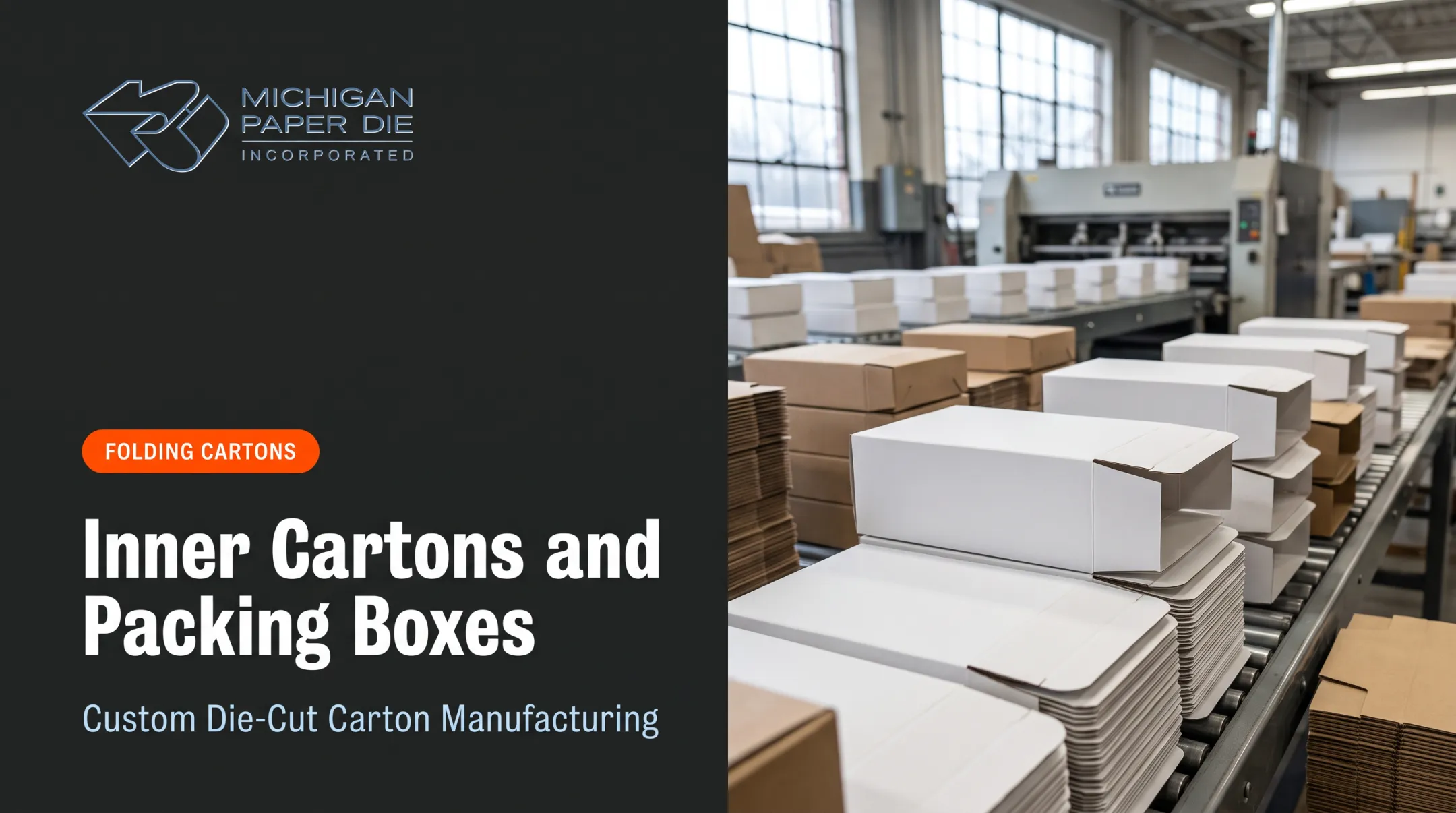
Embossing quality depends heavily on the stock. The best-performing materials include:
- Chipboard for lighter-weight applications
- SBS folding carton board at 18pt and above
- Heavier paperboard grades that hold sharp relief without cracking
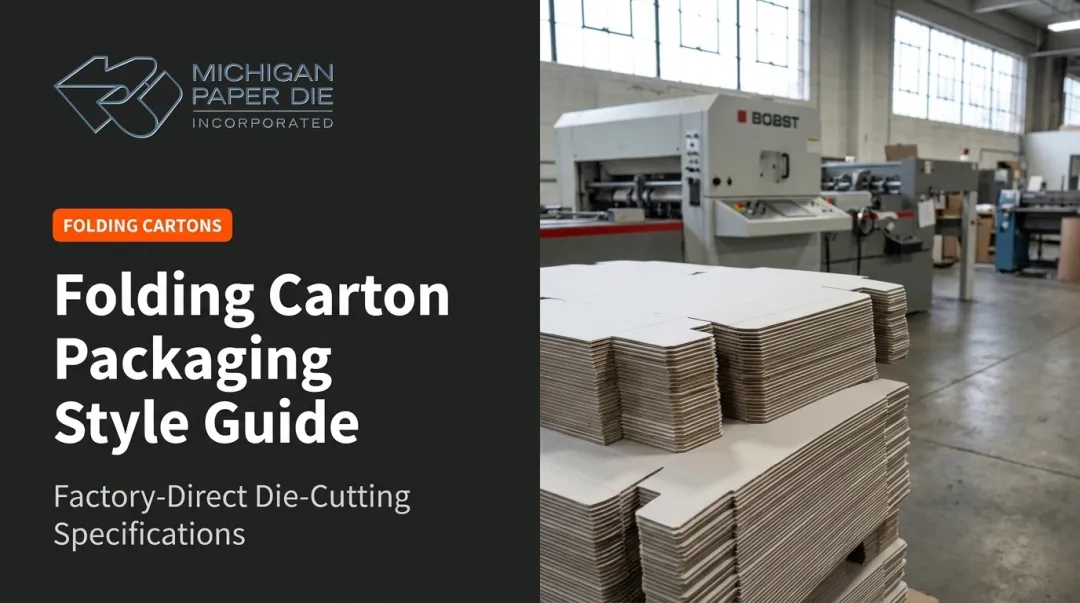
Michigan Paper Die's embossing equipment handles sheets slightly larger than 35 × 49 inches, with material thickness from roughly .002 to .080 inches. That range covers delicate folding cartons through heavier paperboard grades.
The Production Workflow
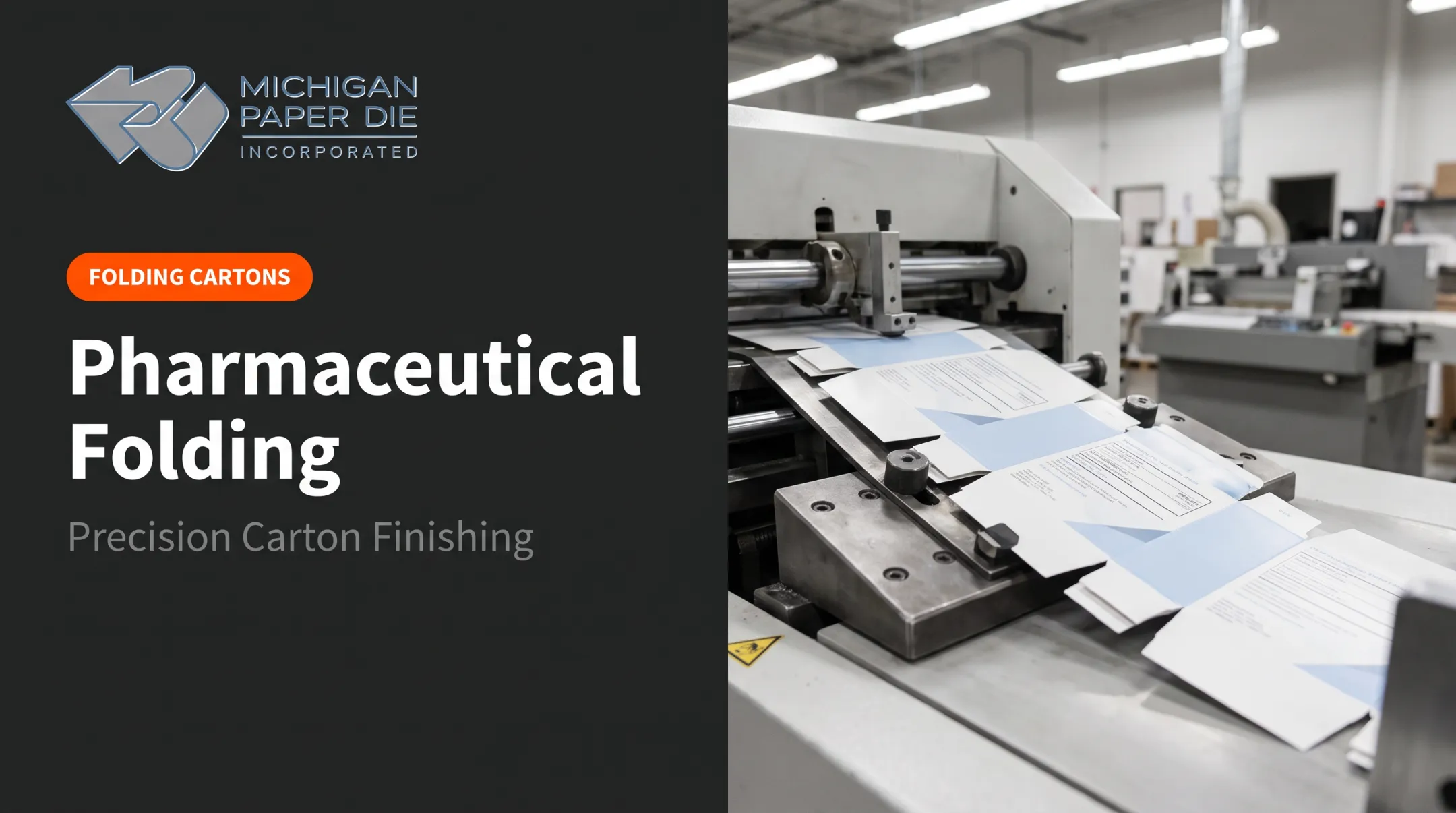
- Review artwork against the carton die-line so the emboss won't interfere with scores or folds
- Import a CAD file (commonly EPS) and cut the physical die on a CNC router
- Build a physical sample on an in-house sample-making table and check it against spec
- Calibrate temperature, pressure, and timing for the specific board grade
- Inspect sheets for alignment, relief clarity, and cracking before the full run proceeds

Michigan Paper Die builds steel-rule dies in-house with CAD software, a CNC router, and an automatic rule-bending machine. Design changes for bulk wholesale orders don't wait on an outside supplier. That control matters most at scale: a misaligned die caught on day one of a 50,000-unit run is a minor fix; the same error after shipping is a costly one.
Design complexity and material thickness both affect how crisp the finished emboss looks. Deep relief near a fold line, for instance, risks fiber cracking on thinner stock. That is why prototype approval happens before full production begins.
Embossing vs. Debossing vs. Printing
Printing applies color to a flat surface. Embossing and debossing change the surface itself.
- Embossing raises the design: best for logos or text you want to physically stand out
- Debossing recesses the design: a strong fit for subtle, minimalist branding that relies on shadow over shine
- Printing adds graphics or color but leaves the board profile untouched
None of these are mutually exclusive. A box can be printed with full-color artwork and then embossed or debossed in specific spots for emphasis. Combination techniques (foil stamping plus embossing) give premium wholesale lines metallic shine and tactile depth in one finish.
Benefits of Embossed Custom Boxes for Wholesale Buyers
Wholesale buyers get clear returns from embossed custom boxes on both the shelf and the balance sheet.
- Texture signals quality before a customer even reads the label. The Touch Advantage research found that identical chocolate was rated as tasting better by 57% of participants when it came in premium, embellished packaging versus plain board.
- Embossed details hold visual identity through handling better than surface printing alone, because the design is formed into the board rather than sitting on top as ink. Shipping performance still depends on board weight and relief depth.
- Die tooling is a one-time charge. Spread across a large wholesale run, that upfront cost per unit drops fast, unlike ink or foil, which carries a recurring per-unit expense at any quantity.
- A consistent embossed logo across thousands of distributed units reinforces identity in a way flat print sometimes can't, because it's felt as well as seen.
- Embossing fits cosmetics, food and beverage, automotive, and retail. Michigan Paper Die's portfolio includes a Ford Mustang 50th Anniversary box with silver foil and an embossed emblem, spanning everyday cartons to collector-grade packaging.

Choosing the Right Wholesale Packaging Partner for Embossing
Outsourced die construction adds days, sometimes weeks, to a wholesale timeline. Every round of artwork revision means another shipment back and forth between converter and die shop.
In-house die construction skips that entirely. Michigan Paper Die has built steel-rule and embossing dies on-site since the late 1960s, drawing on over 40 years of experience with CAD software, a CNC router, and an automatic rule-bending machine. Multiple dies can be built simultaneously, and changes happen on the fly rather than through a third party.
Before any wholesale run ships, look for a partner with a documented quality control process. Michigan Paper Die sends a Quality Control Report with every job, including production notes, mockups, proofs, and pull-sheet checks taken during the run. That paper trail catches inconsistencies before thousands of units go out the door.
The company works directly with:
- Design firms and advertising agencies
- Corporations and commercial printers
- Entrepreneurs launching new product lines
Operating from a 20,000-square-foot Detroit facility with daily UPS and FedEx pickup, Michigan Paper Die supports wholesale folding carton and embossing orders across Michigan and the broader Midwest, including clients in Ohio and Indiana.

Frequently Asked Questions
What does embossed mean on paper?
Embossing is a raised impression created by pressing paper or board between a male and female die. The relief rises above the surface rather than sitting flat like ink.
What are the types of embossing?
The main types are blind (no ink or foil), registered (aligned with printed artwork), and combination (paired with foil stamping). Die complexity ranges from single-level to multi-level to fully sculptured.
What material is used for embossing?
Chipboard, cardstock, rigid setup boxes, folding cartons, and heavier paperboard stocks all work well. Heavier grades, 18pt and above, hold sharp relief better than thin stock.
What is embossed vs. printed?
Embossing physically raises the board surface without necessarily using ink. Printing applies flat color or graphics to the surface without changing its profile.
How much does custom embossing add to wholesale packaging costs?
Die tooling is typically a one-time charge, so cost per unit drops at higher volumes. Complexity and relief depth affect the initial setup cost, not the ongoing per-unit price.
Can embossing be combined with other finishes like foil stamping?
Yes. Combination embossing applies foil and raised texture in one pass, adding metallic shine and tactile dimension in a single setup.